Opens in a new tab
Global Air Compressor Manufacturer
|
Energy Efficient. Built to Perform.
[email protected]
|
+86 199 2842 8592

Industrial Compressed Air Treatment

Compressed Air Dryers

A compressed air dryer removes moisture from compressed air to help protect your equipment and process. Compare refrigerated and desiccant drying, explore Okair dryer series, and match the choice to your airflow, pressure and required dryness.

Compare Dryer Types

Choose Your Drying Technology

Which Type of Compressed Air Dryer Do You Need?

Choose the dryer by how much moisture your process can tolerate. Refrigerated drying usually suits general plant air; desiccant drying serves processes that need much lower moisture levels. The target pressure dew point (PDP) must meet the process specification and stay below the coldest temperature in the downstream pipework.

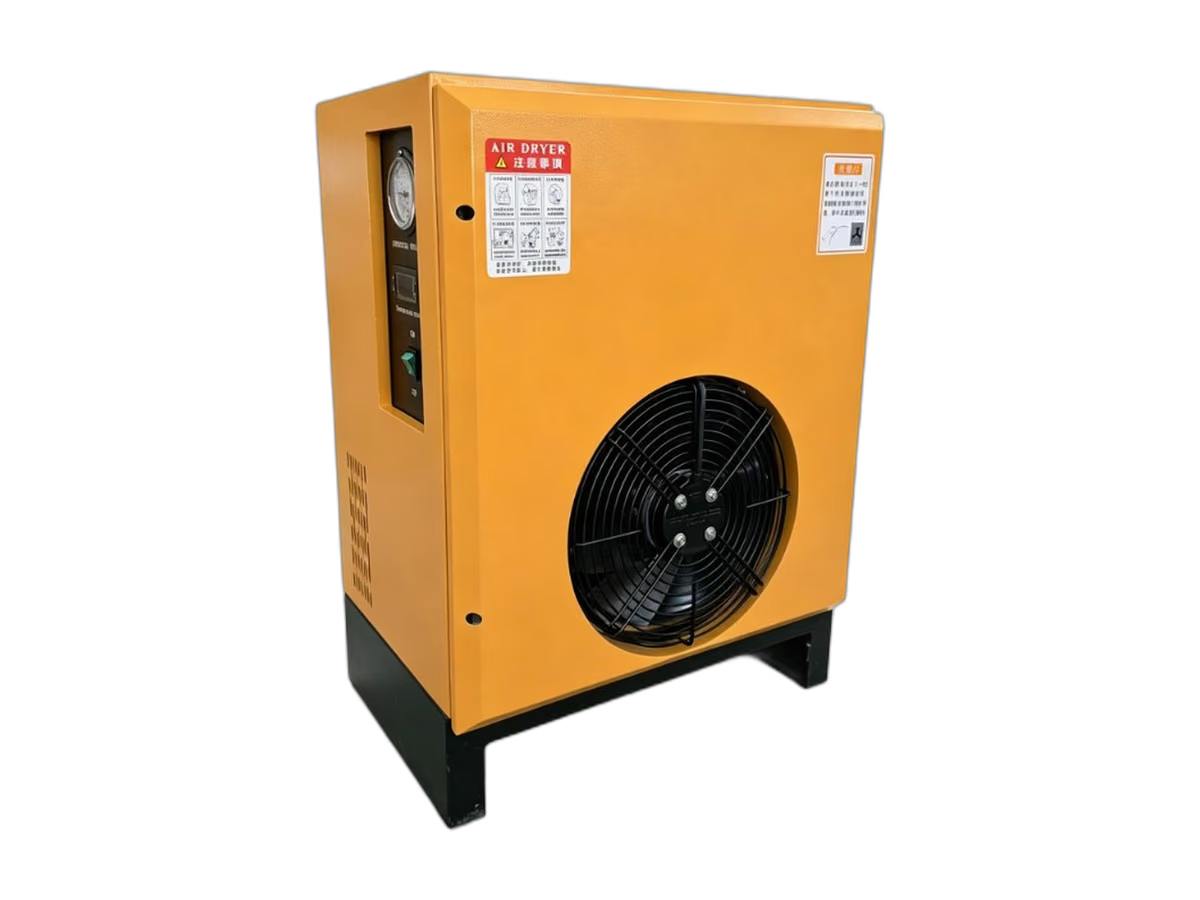
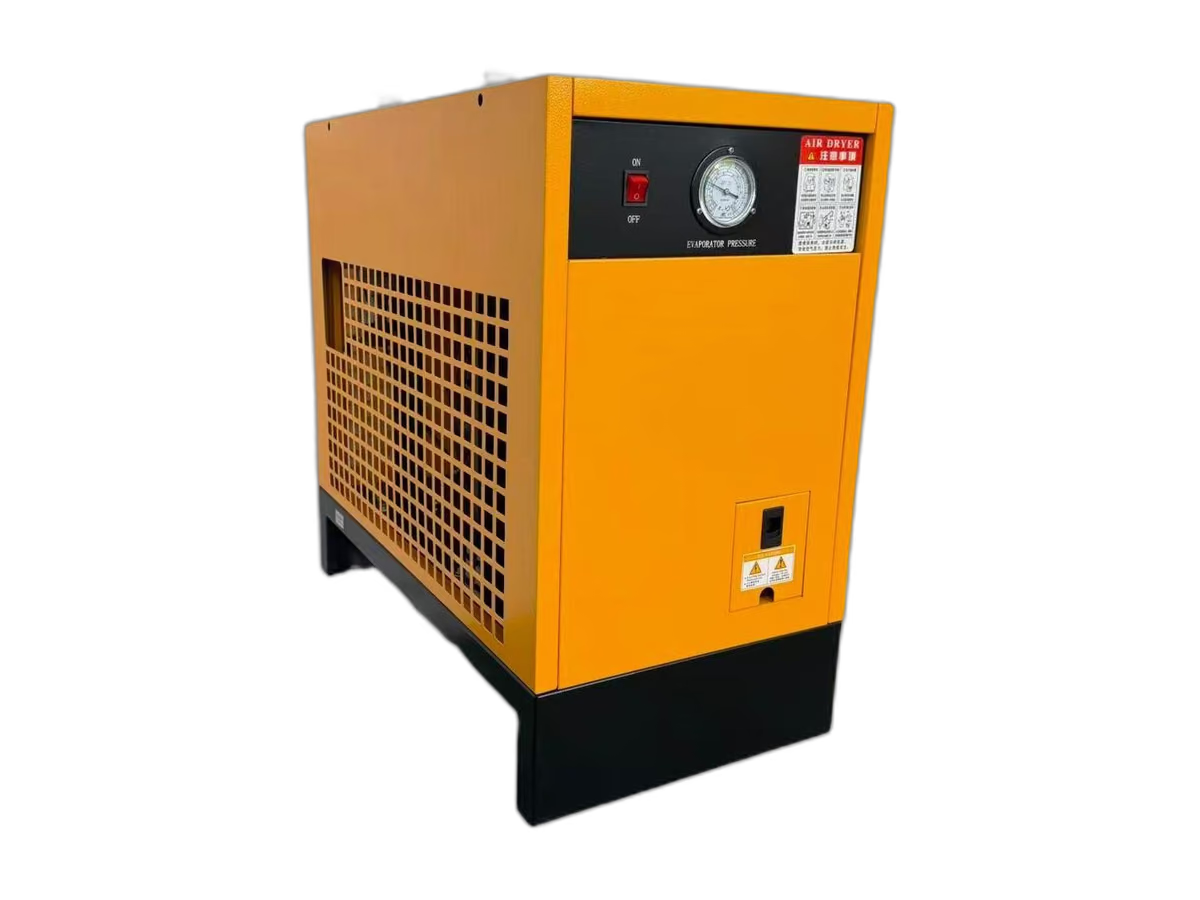
Refrigerated Air Dryers

Typical pressure dew point: +2 to +10 °C.

A practical choice for ordinary pneumatic tools, workshop equipment and general manufacturing where the main goal is to prevent liquid water, corrosion and equipment wear. The dryer cools the air, separates condensed water and drains it away.

Choose refrigerated drying when a positive dew point meets your process needs and the pipework stays warmer than that dew point. It provides everyday moisture control without the very low dew points required by more sensitive processes.
Desiccant Air Dryers

Typical pressure dew point: −40 °C, with −70 °C options.

Choose desiccant drying when residual moisture could affect product quality or when cold pipework calls for a subzero dew point. Common uses include moisture-sensitive food and pharmaceutical processes, electronics production and instrument air.

A desiccant material adsorbs water vapor and is regenerated for reuse. Select −40 °C or −70 °C from the process specification: a lower dew point removes more moisture, but also affects equipment selection and regeneration cost.

Selection factorRefrigerated dryingDesiccant drying
ISO 8573-1 water class targetsRefrigeratedClass 4: PDP ≤ +3 °C; Class 5: ≤ +7 °C; Class 6: ≤ +10 °CDesiccantClass 2: PDP ≤ −40 °C; Class 1: ≤ −70 °C
Main selection reasonRefrigeratedPrevent condensation in general plant airDesiccantMeet stricter process moisture limits or protect cold air lines
Operating energyRefrigeratedElectricity for the refrigeration circuitDesiccantPurge air and/or heating or blower power for regeneration

Technical references: CAGI dryer selection · CAGI air treatment handbook · CAGI purity classes

Food, Pharmaceutical and Other Purity-Critical Processes

Where air contacts ingredients, finished products or packaging, specify oil and particle limits alongside moisture. ISO 8573-1 expresses these as three separate classes in the order particles : water : oil. Set the target at the point of use, then select drying and filtration together.

For food processing, US 21 CFR 117.40(g) requires treatment of compressed air added to food or used to clean food-contact surfaces or equipment to prevent contamination by unlawful indirect food additives. Specify the moisture, oil and particle limits for the application, then select the dryer and filters as one treatment system.

For sterile pharmaceutical production, EU GMP Annex 1, sections 6.18–6.19 also addresses chemical and microbial quality, with sterilizing filtration for gases used in aseptic processes. Build the air treatment specification around the actual product contact and process requirements.

Find Your Series

Explore Okair Air Dryers

Browse our refrigerated air dryer series below. Compare the operating limits, then open a series page for model specifications. For desiccant drying, send us your application and dew point requirement for selection support.

OKF Series Refrigerated Air Dryers

OKF Series Refrigerated Air Dryers, 1.2-13 m³/min

Seven refrigerated air dryer models with aluminum plate heat exchangers, 1.2 to 13 m³/min flow, inlet air from 15 to 65 °C, and standard product pressure up to 16 bar. Compare capacity, connection size, refrigerant, dimensions, and weight before requesting a quote.

Airflow
1.2-13 m³/min
Operating pressure
7-16 bar
Pressure dew point
3 °C at 35 °C inlet and 25 °C ambient

Standard pressure condition: 7 bar.

View Product
OKF-A Series Refrigerated Air Dryers

OKF-A Series Refrigerated Air Dryers, 1.5-16 m³/min

Seven shell-and-tube refrigerated air dryer models for 1.5 to 16 m³/min at 7 to 10 bar. Compare flow, pipe diameter, power supply, installation dimensions, and weight before requesting a quote.

Airflow
1.5-16 m³/min
Operating pressure
7-10 bar
Pressure dew point
2-10 °C

Inlet temperature up to 45 °C; ambient temperature up to 35 °C.

View Product

Selection Guide

Match the Dryer to Your Operating Conditions

The right air dryer for your compressor must handle the actual air entering it. Use the required dryness and the most demanding operating conditions to narrow the selection.

01

Start with the Required Pressure Dew Point

Pressure dew point (PDP) is the temperature at which water vapor begins to condense at the operating pressure. Choose a PDP below the lowest expected temperature in the downstream pipework, and check any stricter requirement from the process or equipment supplier. PDP and atmospheric dew point use different pressure conditions, so compare dryer specifications on the same basis.

02

Check Flow, Pressure and Temperature Together

Give us the peak airflow, operating pressure, highest inlet temperature and highest ambient temperature. These conditions affect the capacity a dryer can handle. Check the selected model's rating at your conditions rather than choosing by compressor horsepower alone. Include operating hours, changes in demand and the available power supply.

03

Compare the Cost of Operating the System

Look beyond the purchase price. Compare electricity, compressed air used for regeneration, pressure drop and routine maintenance at your expected load. For a desiccant dryer, include any heater or blower demand as well as purge air. A lower electrical rating alone does not establish a lower total running cost.

The Complete Air Path

Plan the Dryer as Part of Your Air Treatment System

Drying works alongside cooling, separation, filtration and drainage. Each handles a different part of air treatment, so removing visible water is only one step toward the air quality your process needs.

Cooling and Separation

An aftercooler lowers the air temperature. A water separator removes liquid water that has condensed, reducing the liquid load passed downstream.

Filtration

Filters address specified contaminants such as particles and oil aerosols. Select the grades and their positions to suit the dryer and the required air quality.

Drying

The dryer reduces water vapor to the required pressure dew point. Match its capacity to the air reaching it and the conditions in the downstream system.

Drainage

Condensate drains discharge collected liquid from the relevant equipment. Include drain operation and maintenance access when planning the installation.

Already have a compressor with a built-in dryer? Check its rated capacity and dew point at your conditions before adding separate equipment. The treatment layout and filter sequence should follow the selected equipment's requirements.

Before You Choose

Compressed Air Dryer FAQs

A water separator removes liquid droplets, but water vapor can remain in the air and condense as the pipework cools. A dryer reduces that vapor content. Whether you need one depends on the required pressure dew point, downstream temperature and the moisture limits of your equipment or process.

No. Horsepower does not establish the airflow and conditions entering the dryer. Selection needs the required flow, operating pressure, inlet and ambient temperatures, and target pressure dew point. Share the compressor specifications and your operating conditions so we can check a suitable dryer capacity.

No. Dryness describes moisture content. Oil and particles are separate air-quality requirements and need the appropriate treatment and verification. Specify all required air-quality limits with your inquiry; selecting a dryer alone does not establish suitability for breathing air or direct contact with food or pharmaceutical products.

Send the application, airflow, operating pressure, required dew point, inlet and ambient temperatures, and power supply. Include existing equipment, quantity and destination. If you do not know the dew point requirement, describe the process and where the air will be used so we can discuss the selection with you.

Talk to Okair

Get Help Selecting Your Air Dryer

Tell us how your compressed air will be used. We will review the drying requirement and operating conditions with you, then help you select a dryer type and series for your project.

Okair manufactures compressed air treatment equipment and supports distributors, OEM/ODM buyers and project integrators. Orders start from one unit, with configuration requirements discussed for your application.

Have these details ready: application, airflow, pressure, required dew point, inlet and ambient temperatures, power supply, existing equipment, quantity and destination.

REQUEST A QUOTE

Tell Us About Your Requirements

Share your project details and our team will get back to you with the next steps.